
November 19, 2026
Vinyl Bulkhead Design and Cost: A Guide to Seawalls and Retaining Walls
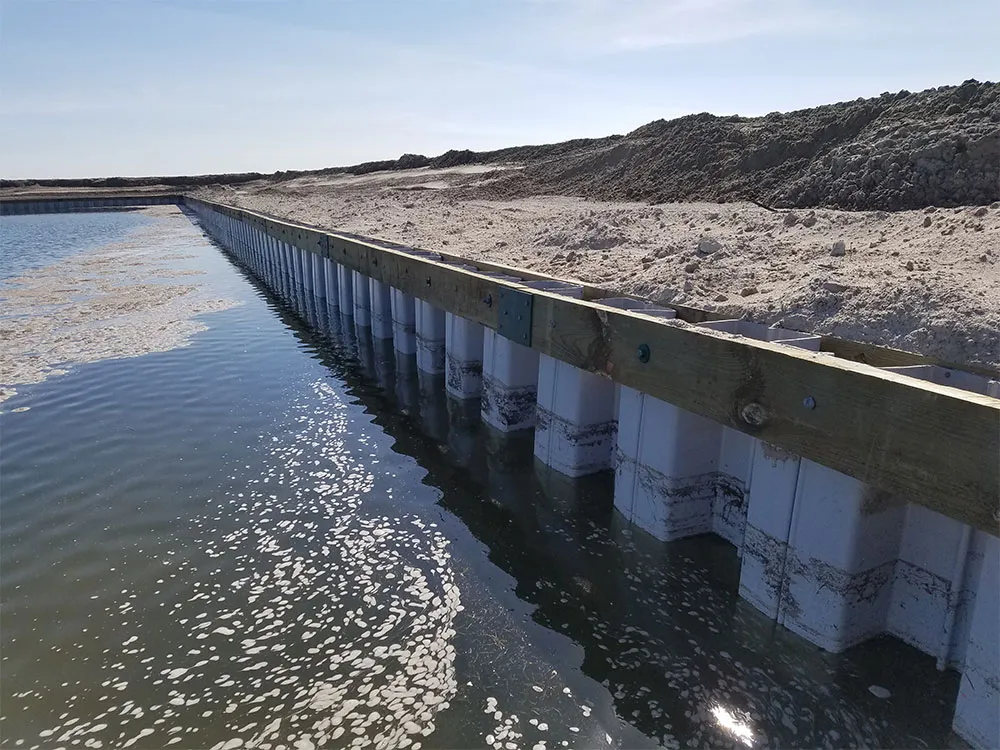
Vinyl bulkhead design comes down to 4 choices: the vinyl sheet piling profile, how deep the panels go, how the wall is anchored, and the timber and hardware that hold it together. Those same choices drive the cost. This guide explains each one for seawalls and retaining walls, and what to send for a materials quote.
Key Takeaways
- A vinyl bulkhead is a system: vinyl panels, timber wales, tie-backs, an optional cap and hardware.
- The site sets the design: wall height, soil and water decide the profile, embedment and anchoring. The engineer of record makes the final call.
- The design sets the cost: length, height, profile, anchoring, timber, site access and permits drive the price. American Pole & Timber (APT) quotes materials per project.
- Wood costs less to build, vinyl less to own: vinyl bulkheads have the lowest life-cycle cost.
- APT isn’t a contractor: we don’t build walls. We supply the materials, support the design and can help you find an APT-approved installer.
What are the parts of a vinyl bulkhead?
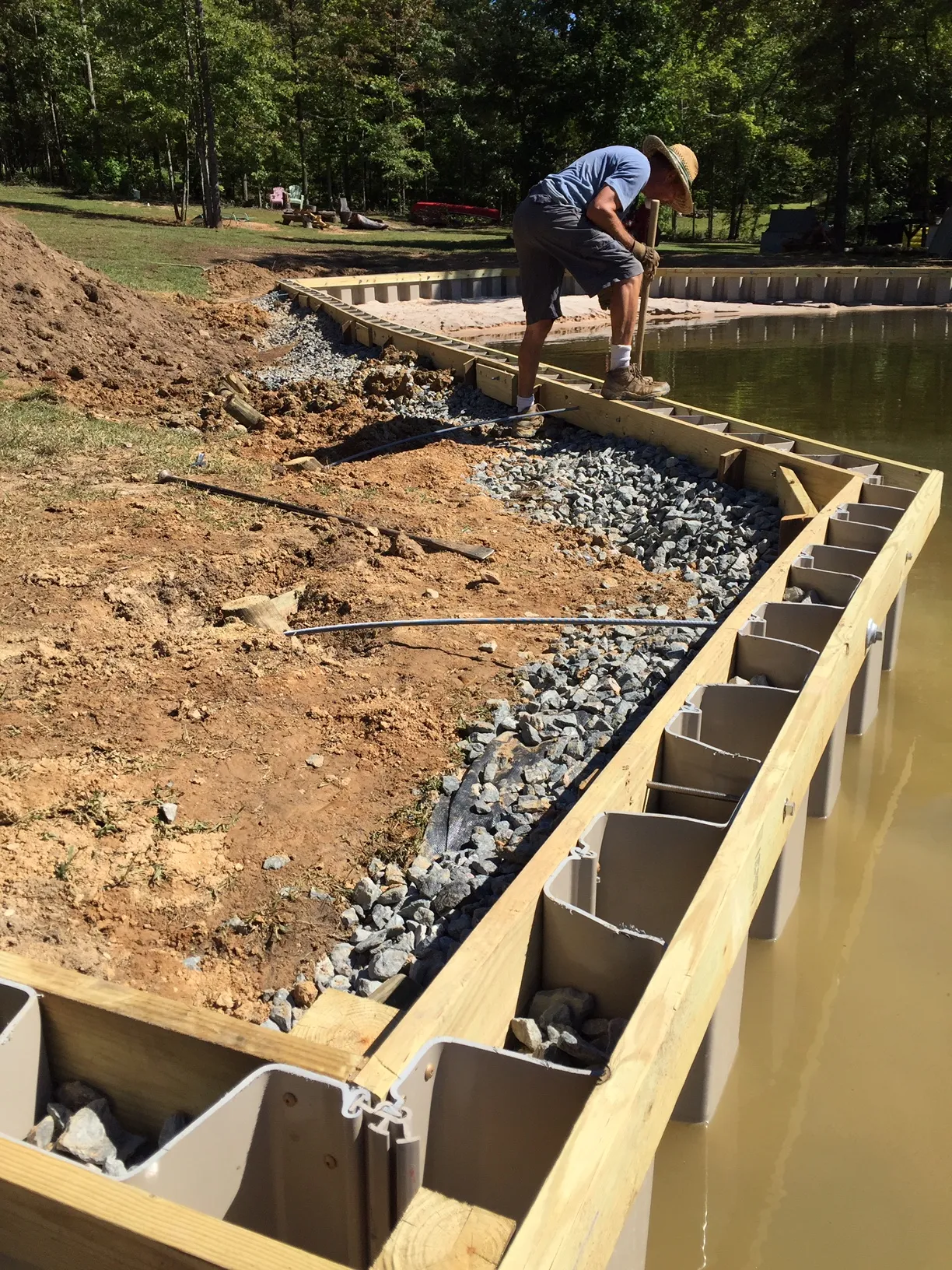
Vinyl panels form the wall, timber wales stiffen it, tie-backs anchor it and hardware joins it all.
| Part | What it does |
|---|---|
| Vinyl sheet pilings | Interlocking PVC panels driven into the ground form the wall and hold back the soil. |
| Wale | A treated timber bolted along the panels that stiffens the wall and carries the tie-back load. |
| Back wale (or backboard) | A timber on the other face of the panels; bolts through both clamp the panels between them. |
| Top cap (optional) | Finishes the top of the wall and protects the panel edges. |
| Tie rods (or tie-back cable) | Run from the wale back into the yard and keep the top of the wall from tipping out. |
| Deadmen | Anchor the tie rods: usually a 5-inch post, 4 to 8 feet long, buried behind the wall. Manta-Ray anchors are another option. |
| Pilings (some designs) | Treated pilings along the wall add support. |
| Hardware | Bolts, nuts, washers and screws or nails, galvanized or stainless steel. |
Our bulkhead materials page compares the parts of wood and vinyl walls.
How does vinyl bulkhead design work?
Exposed height, soil and water decide the panel profile, embedment depth and anchoring. An engineer of record should size these for your site, and local codes and permits set what’s required.
Wall height and loads
Exposed height runs from the mudline (the bottom in front of the wall) to the top. Taller walls hold back more soil and water, so they typically need stronger panels, deeper embedment and more anchoring; a driveway, pool or building near the wall adds load.
Embedment
Enough panel must sit below the mudline to keep the bottom of the wall from kicking out. How much depends on the soil, the wall’s height and the anchoring; walls without tie-backs need more. Your engineer sets the depth from soil data and allows for scour, the bottom washing away in front of the wall. Soil also decides the installation method.
Panel profile
Profiles differ in shape, thickness and strength, and heavier profiles typically suit taller walls and rougher water. APT supplies Tidewall vinyl sheet piling; ask us about other brands. Each panel covers 12 inches of wall (18 or 24 inches in some series). Drawings of Tidewall profiles TW-30 to TW-95 and corners, plus technical papers, are on the vinyl sheet piling technical data tab.
Anchoring
Most bulkheads are tied back: rods or cable run from the wale to deadmen or anchors buried well behind the wall. Some low walls in firm soil stand without tie-backs (cantilevered) and rely on deeper embedment. Rod size, spacing and anchor distance are your engineer’s numbers; APT supplies galvanized tie-back rods from 5/8 to 1-1/4 inches, up to 20 feet long.
Exposure and drainage
Salt or brackish water, waves, boat wakes and sun shape the design. The vinyl is UV-resistant, window-grade PVC that marine borers can’t attack (see why UV inhibitors matter). The wood parts need the right treatment: in most cases, APT recommends .60 pcf for fresh water and 2.5 pcf for brackish or salt water, and polymer-coated wales and caps last longer. Behind the wall, drainage stone, filter cloth and, where the design calls for them, weep holes let water out while keeping soil in.
How do vinyl retaining walls differ on the water and on land?
Both are built like a bulkhead, with panels, wales and anchors, but on land, soil pressure, nearby loads and drainage matter more than water exposure. On the water, a vinyl retaining wall lines lakes, ponds, canals and golf course water features; on land, it holds back soil where a yard steps down, or lines a drainage channel.
Timber in ground contact needs the right treatment (APT usually recommends .60 pcf), and local codes decide when a wall needs a permit and an engineered design.

What drives the cost of a vinyl bulkhead?
Length and height set how much material the wall needs; the profile, anchoring and timber set what each foot costs; and the site sets the installation cost. APT quotes the materials for each project; your installer quotes the labor.
| Cost driver | How it moves the price |
|---|---|
| Wall length | More feet of wall means more panels, wales, tie-backs and hardware. |
| Exposed height and embedment | Longer panels, often a heavier profile and more anchoring. |
| Panel profile and coverage | The profile sets the price of each sheet; wider panels mean fewer sheets to drive. |
| Anchoring | Tie rods, deadmen or anchors add material, digging and labor. |
| Timber treatment and coating | 2.5 pcf timber for salt water costs more than .60 pcf, and polymer coating adds cost up front but extends the timber’s life. |
| The old wall | Removing an old wall usually costs more than building in front of it, where that’s allowed. |
| Site access | Work from land with light equipment usually costs less than work from a barge. |
| Engineering and permits | Design, survey and permit fees vary by location. |
How are vinyl seawall panels priced?
Vinyl seawall panels are sold by the sheet, and the price of each sheet depends on its profile and length. Both come from the design, so send us the wall’s length, exposed height, water type and any drawings, and our Project Consultants will quote the full materials package, hardware included. Request a materials quote or call 1 (800) 716-0636.
How does vinyl compare with wood, steel and concrete?
Wood costs the least to build and vinyl the least to own. Steel and concrete suit heavy walls but bring corrosion and repair costs in salt water.
| Material | Strengths | Watch for |
|---|---|---|
| Vinyl sheet piling | Lowest life-cycle cost; sheets expected to last more than 50 years; won’t rot or rust | Higher first cost than wood |
| Treated timber | Lowest first cost; natural look; easy to build around curves | Rot and marine borers shorten its life; needs 2.5 pcf treatment in salt water |
| Steel sheet piling | Strength for tall, heavily loaded walls | Rusts in salt water unless protected; APT can polymer-coat steel sheet piling |
| Concrete | Heavy and durable | Costly to build and repair; cracks let salt water reach the reinforcing steel |
Where does APT fit in your project?
APT supplies the materials and supports the design; your installer builds the wall. We deliver vinyl sheet piling, timber, pilings and hardware as one ready-to-build package, and our Project Consultants help you and your engineer choose the profile and components. Need someone to build it? Find an APT-approved installer for your seawall, bulkhead or retaining wall.
Vinyl bulkhead design and cost: frequently asked questions
How deep should vinyl sheet piling be driven?
Vinyl sheet piling must go deep enough below the mudline that the soil holds the bottom of the wall in place. How deep depends on the soil, the wall’s height, the anchoring and any scour in front of the wall; cantilevered walls (no tie-backs) need more. Your engineer of record sets the actual depth.
Which vinyl sheet piling profile do I need?
The right profile depends on the wall’s height, the soil, the anchoring and the water it faces; taller walls and rougher water typically need heavier profiles. APT’s technical data includes drawings of Tidewall profiles from TW-30 to TW-95. Your engineer matches the profile’s strength to the loads, and our Project Consultants can help you compare options.
How much does a vinyl bulkhead cost per foot?
No single number fits every wall. The price per foot depends on the wall’s height, profile, anchoring, timber, site access, demolition and permits. APT quotes the materials for each project from the wall’s length, exposed height and water type, and your installer quotes the labor after seeing the site.
Is a vinyl bulkhead cheaper than a wood bulkhead?
Not up front: wood bulkheads cost the least to build. But vinyl bulkheads have the lowest life-cycle cost: the vinyl sheets can be expected to last more than 50 years, and you avoid replacing a rotted or borer-damaged wood wall.
Can vinyl sheet piling be used for a retaining wall on land?
Yes. Vinyl sheet piling builds retaining walls on land as well as on the water, for example where a yard steps down or along a drainage channel. Away from the water, soil pressure, nearby loads and drainage drive the design, and local codes decide when the wall needs a permit and an engineered design.
Get a vinyl sheet piling materials quote
Use the form below or call 1 (800) 716-0636. Tell us the wall’s length and exposed height, the water type (fresh, brackish or salt), the profile if you know it and your project ZIP code, and attach any drawings. An APT Project Consultant will reply with a quote.
Find an APT-approved installer
Need someone to build the wall? Say so in the same form, and we’ll help you find an APT-approved installer near the project, an independent contractor you hire directly.
Posted in News & Articles, Products
Massive Selection. Custom Production. We Get Your Project Moving Fast.
Ready to start your pole & timber project?