
November 2, 2026
The foundation of a 3-time Builder of the Year
Bayway Homes has been building communities across the Houston area since 1997, and the foundation of their reputation comes down to one principle: what you can’t see matters more than what you can. Their Construction Manager, Cameron Cole, sat down with our team at Peacock Isle in Dickinson, Texas, to talk about what earned Bayway the Bay Area Builders Association Builder of the Year award three times, and why the company’s approach to elevated homes has turned first-time piling buyers into lifelong advocates.
Key takeaways
- Bayway Homes has earned Builder of the Year three times by going beyond code requirements on every build.
- Bayway currently has seven communities across Dickinson, Seabrook, La Porte, Shore Acres, and Houston.
- Peacock Isle in Dickinson sits on land that was once a Catholic Bishop’s retreat, and its homes are built on pilings that go 13 feet into the ground.
- Every Bayway home is designed around the family’s specific needs, from floor plan layout to elevator-ready framing.
Who is Bayway Homes?
Bayway Homes is a Houston-area residential builder founded in 1997 by John Skeel. The company was built on a straightforward goal: deliver well-constructed homes at an affordable price to the local community. That approach earned Bayway the Bay Area Builders Association Builder of the Year award in 2003, 2004, and 2008.
Today, Bayway builds across seven active communities spanning Dickinson, Seabrook, La Porte, Shore Acres, and Houston. Their developments range from waterfront homes with direct bayou access at Peacock Isle to townhomes like the recently sold-out Armandwilde in Houston. Previous communities include El Mar Village, Nantucket Hideaway, Terra Bella, and several others across the region.
What sets Bayway apart from larger builders is that the company stays local. Cameron, who manages construction at Peacock Isle, put it simply: “We live here. Everybody in the company lives around the area that we build. It’s not like we’re some big box company coming in, building a neighborhood, and then leaving. We stay with the people we build for.”
What makes Peacock Isle different?
Among Bayway’s current communities, Peacock Isle stands out for its setting and history. The 47-home development in Dickinson sits along Dickinson Bayou, with 23 home sites offering direct backyard water access. Homes range from 1,432 to 3,414 square feet, with three to five bedrooms, and pricing starts at $299,000.
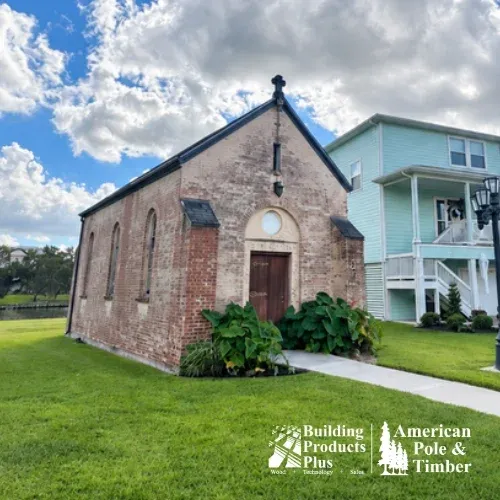
The land itself carries a story. The property was once part of a Catholic Bishop’s retreat connected to the Diocese of Galveston. Bishop Christopher E. Byrne had a private residence constructed nearby, and the grounds became known for the peacocks that roamed the property. When the birds eventually wandered along Dickinson Bayou, the name stuck with the land. A chapel from that period still stands in its original condition.
Cameron noted that Bayway chose to build the community on pilings because they trust the material and because the elevated design gives the neighborhood a distinct character. “Even though we’re more inland, the neighborhood has a super beachy feel,” he said. “It provides a relaxed environment.” What started as a construction approach driven by local building requirements turned into something buyers actively prefer.
What surprises buyers about elevated homes?
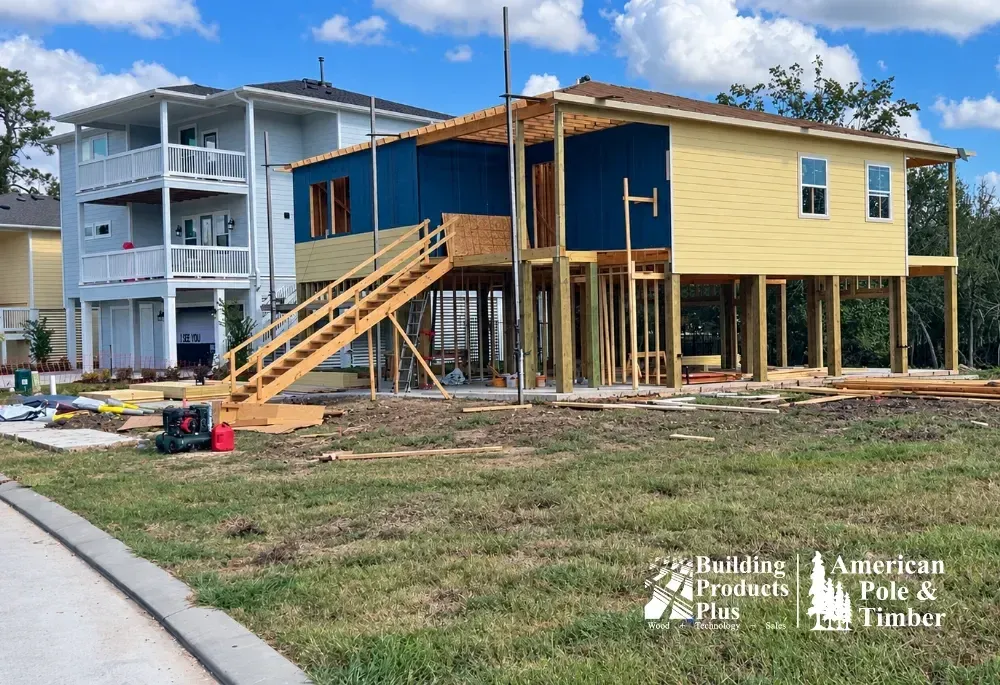
According to Cameron, first-time buyers at Peacock Isle are often surprised by two things.
The first is how deep the pilings go. Bayway drives 10-inch square pilings 13 feet into the ground. Most buyers have no frame of reference for that until they see it happen on their lot.
The second is that even a well-built elevated home can be felt moving slightly. “If you get a super strong wind or if you have a bunch of people in the house moving around, you’re not gonna see it, but you’ll be able to feel it a little bit,” Cameron said. This is normal structural behavior for any elevated structure and is a sign the building is performing as designed, flexing rather than resisting.
The biggest surprise, though, may be how the neighborhood feels overall. Peacock Isle is not on the beach, but the elevated homes and bayou setting give it a relaxed, coastal character that buyers were not expecting when they first visited.
How does Bayway design for families?
Bayway does not build one-size-fits-all homes. Cameron explained that the company works closely with each buyer to understand their family’s needs and preferences before construction begins. Floor plans are flexible, and the team considers how a family will actually use the home over time.
One example of this thoughtful design is that every home at Peacock Isle is built elevator-ready. The structural framing and space allocation for an elevator are part of the original construction. Until the homeowner decides to install one, that space functions as closet storage. When the time comes, the elevator can be added without structural modifications.
For families with elderly members or anyone planning to age in place, this means an elevated home is not a barrier. For younger families, it means extra closet space now and an option they can activate later. The decision to include this from the start reflects the kind of forward-thinking that Bayway brings to each floor plan.
Cameron also noted that some Bayway homeowners eventually downgrade to smaller homes within Bayway communities, not because of dissatisfaction, but because a family member moved out and the larger home felt like more space than they needed. The fact that they stay with Bayway when they move says something about the relationship.
"It doesn’t matter how pretty you make something look, if it’s not built right, it’s not built right. We want our buyers to be confident and happy, not have to worry about anything except moving in."
What does “built better” really mean?
Bayway’s tagline is “built better,” and Cameron was specific about what that means in practice. When asked why the company goes beyond code requirements, he did not hesitate:
“It’s super important for us because the structural foundation is the foundation of the home. If you don’t have a good foundation, the rest of the home is off. It doesn’t matter how pretty you make something look, if it’s not built right, it’s not built right. We definitely don’t ever want any of our buyers to ever have to question the structural integrity of their home. We want them to be confident and happy they can move into a brand-new home, not have to worry about anything except moving in.”
This philosophy shows up in details that most buyers never see. Bayway uses six nails per shingle instead of the industry standard four. They wrap all exterior walls in OSB sheathing rather than the more common foam board. These are decisions that affect performance during severe weather, not curb appeal on a sales brochure.
For contractors and builders reading this, the takeaway is practical: investing in structural details beyond code is part of how a company earns Builder of the Year three times and keeps buyers coming back through referrals.
What is it like working with a trusted material supplier?
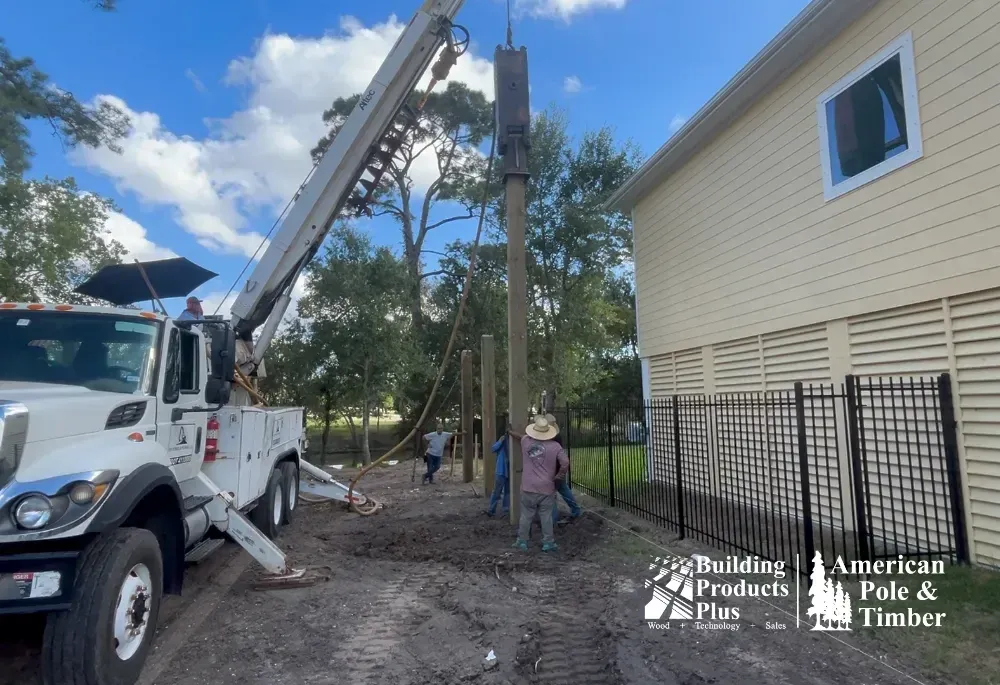
Bayway sources their pilings and structural materials through Amanda Kimmey at American Pole and Timber. Cameron’s feedback on working with our team was straightforward.
“They deliver everything when they say they’re gonna deliver it. There’s hardly ever any issues. If there is, they’re very upfront about it, so it makes scheduling and everything on my end super easy.”
When asked if he had any suggestions for improvement, Cameron’s response was direct: “Don’t change a thing.”
For a construction manager running multiple lots in an active community, reliable material delivery is not a nice-to-have. It is what keeps the schedule moving and keeps subcontractor crews productive. That consistency is why Bayway continues to source from us.
Frequently asked questions
Can you build a home on pilings inland, away from the coast?
Yes. Homes on pilings are not limited to beachfront properties. Many communities in the greater Houston area use piling foundations because of local building code requirements or because the elevated design offers advantages like improved airflow, a distinctive coastal aesthetic, and additional covered space underneath the home.
How deep do residential pilings go in Texas?
Piling depth depends on soil conditions, structural load, and local engineering requirements. At Peacock Isle in Dickinson, Bayway Homes drives 10-inch square pilings 13 feet into the ground. Coastal areas with softer soils or higher wind loads may require deeper embedment.
Are elevated homes more expensive to build than slab-on-grade?
Elevated homes on pilings typically cost more than slab-on-grade construction due to the foundation work involved. However, they can open up land for development in areas where slab construction is not permitted under local building codes. They may also qualify for lower flood insurance premiums because the living space sits above the base flood elevation.
Do elevated homes move or sway?
A slight amount of movement is normal in any elevated structure and is a sign the building is performing as designed. Strong wind or foot traffic from multiple people can sometimes be felt, but it is not visible and does not affect structural integrity. The pilings and framing are engineered to flex under load, which is safer than a rigid system that resists movement.
Sources and references
- Bayway Homes
- Bay Area Builders Association, Builder of the Year Awards (2003, 2004, 2008)
Building a project that needs pilings, treated lumber, or structural materials? Give us a call. We ask the right questions to get you the right materials for your specific application.

Posted in News & Articles

Massive Selection. Custom Production. We Get Your Project Moving Fast.
Ready to start your pole & timber project?