
Reclaimed wood for homes: 7 things to know before you build with it
 The gray, weathered, full-of-character look of reclaimed wood is something new lumber cannot fake on its own. It is beautiful, but reclaimed wood comes with real tradeoffs on cost, treatment, and strength that surprise most homeowners. Here is the honest picture, and the smarter way we help clients get the same aged look with wood you can actually build with. Reclaimed wood for homes works best as a decorative accent, not a structural material, and it usually costs more, not less. For most projects, the better route is new timber we hand-age to look reclaimed: it captures the same weathered character while staying strong, gradable, and available on your schedule. Here is the tradeoff. True reclaimed stock is hard to grade, rarely treatable, and unpredictable to source, so it fits small accent pieces far better than load-bearing work.
Key Takeaways
- Best look, fewer limits: new timber can be hand-hewn and aged to match reclaimed character, with verified strength.
- Reclaimed is appearance-first: true reclaimed wood suits decorative beams, mantels, and flooring, not load-bearing framing.
- Reclaimed rarely saves money: sourcing, cleaning, and grading make it a premium spend, and supply is unpredictable.
- Treating reclaimed is hard: the species is often unknown, and treatment changes the gray look buyers want.
- The reliable route: hand-aged new timber is gradable, available, and can be used structurally when the design calls for it.
This guide explains what reclaimed wood is, where it genuinely fits, and the honest tradeoffs on cost, treatment, and strength. Then it shows the approach we recommend most often: new timber aged by hand to capture the reclaimed look. We manufacture and remanufacture timber from our yard in Houston, Texas, so these are the same points we walk through with clients every week.
What is reclaimed wood?
Reclaimed wood is timber that already had a life in an earlier structure, then gets recovered and reused. Most reclaimed timber in North America is cypress, oak, or fir, salvaged from sources like these:
- Old barns and farm structures
- Sinker timber recovered from rivers and lakes
- Vintage barrels and storage crates
- Decommissioned timber bridges
- Retired ships and dock structures
The appeal is real: decades of weather and use give old timber a gray patina, surface checking, and character that new lumber does not have straight off the saw. For a feature wall, a mantel, or an exposed ceiling, that character is the whole point. 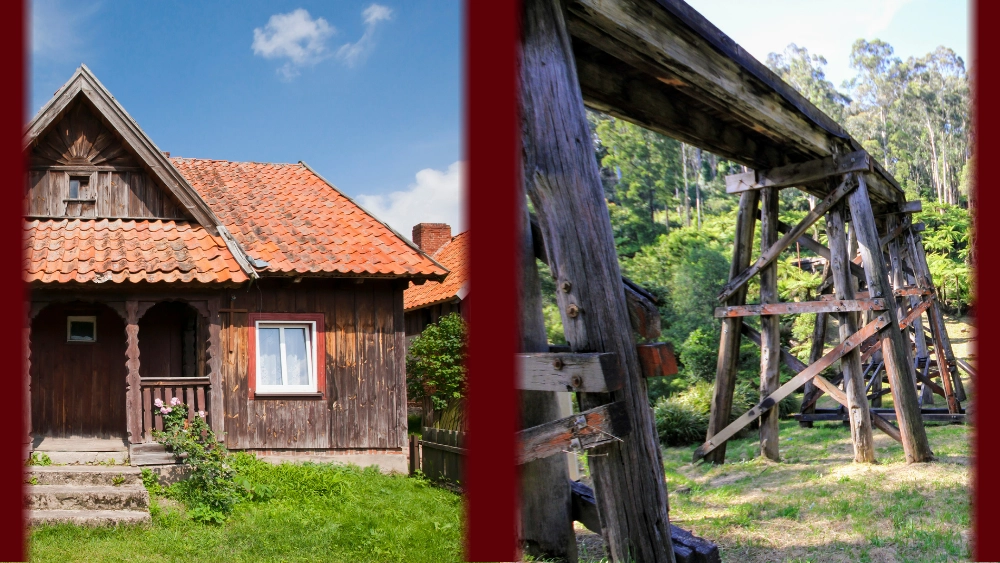
The honest tradeoffs of true reclaimed wood
Before you commit to reclaimed stock, it helps to know the three things that catch most homeowners off guard.
It is difficult to use structurally
You cannot see through a weathered gray face, so you cannot confirm what is underneath. To prove reclaimed timber is sound, the gray faces have to be cut off and the clean wood inspected, and that process routinely turns up rot and defects that force pieces to be set aside. Because the quality is hard to verify, reclaimed beams and trusses in most homes are decorative, not load-bearing.
It usually cannot be treated
Pressure treatment needs a known species and clean wood to take the chemistry correctly. With reclaimed material the species is often unknown, so it cannot be treated with confidence, and treatment would change the gray color that made the wood desirable in the first place.
It does not cut cost, and supply is unpredictable
The common assumption is that old wood is cheap wood. It is the opposite. Sourcing, transporting, cleaning, cutting, and regrading reclaimed timber is labor intensive, and a lot of material gets rejected along the way, which drives the price up. Availability also swings with whatever happens to be salvaged, so matching a specific species, size, or quantity on a deadline is genuinely hard. Reclaimed wood for homes is a premium, made-to-hunt material, not a budget one.
Where reclaimed wood genuinely fits
None of this means reclaimed wood is a bad choice. When the goal is pure appearance and the piece carries no structural load, it shines:
- Decorative trusses and beams set into a ceiling for character
- Fireplace mantels where the patina is on full display
- Flooring that rests on a subfloor and carries no load while showing the old grain
- Feature walls and accent cladding
The catch is simply getting sound, consistent reclaimed material in the size and quantity your project needs, when you need it. That is exactly the problem the next section solves.
The smarter choice: new timber hand-aged to look reclaimed
Here is the option most homeowners do not know exists, and the one we recommend most often. We take sound, fully gradable new timber and age it by hand to give it the same old character. Hand-hewing, marring, and surface work reproduce the look of barn wood on timber whose strength is known and verifiable. The advantages line up exactly where reclaimed falls short:
- Same look: the weathered, hand-worked character reads as genuine reclaimed timber.
- Real strength: because it is new and graded, it can be used structurally when the design calls for it.
- Available on schedule: we make it to your species, size, and quantity, so supply is not left to chance.
- Treatable when needed: known species means it can be treated for the application.
This is the route we use for our timber trusses and corbels when a client wants the old-world look without the limits of true reclaimed stock. You get the character you are after and a beam you can actually build with. 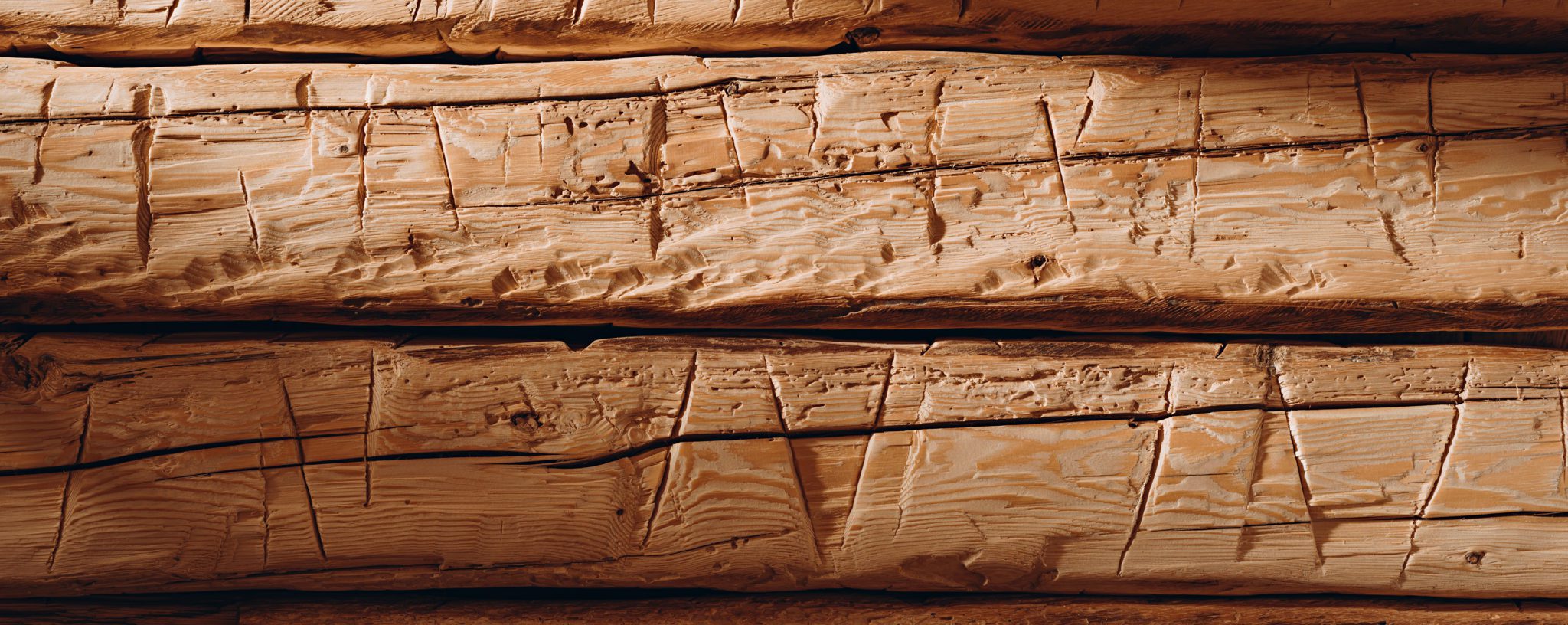
Reclaimed wood vs hand-aged new timber
This comparison keeps the focus on what matters for a home project, so you can weigh the look against cost, strength, and availability.
| Factor | True reclaimed wood | Hand-aged new timber |
|---|---|---|
| Aged, weathered look | Authentic | Reproduced by hand, very close |
| Structural use | Decorative only unless regraded | Yes, graded and verifiable |
| Cost | Premium (labor to source and grade) | Predictable, often lower |
| Availability | Unpredictable, salvage-dependent | Made to your species, size, and quantity |
| Can be treated | Rarely (species unknown) | Yes, when the application needs it |
| Best for | Small accent pieces | Trusses, beams, mantels, and feature work at any scale |
For most homes, hand-aged new timber wins on every practical axis while matching the look, which is why it is our default recommendation.
The reclaimed look for Houston and Gulf Coast homes
From our yard in Houston, Texas, we manufacture hand-aged new timber trusses, beams, and mantels for residential projects across Texas, Louisiana, and the wider Gulf Coast. Our approach is to consult, inform, and supply. We ask what the piece needs to do and what look you are after, tell you honestly whether reclaimed character or hand-aged new timber fits best, then make it to spec. If you want the reclaimed look for a home in the Houston area or anywhere we ship, our project consultants in Houston, TX can size up the application with you before you buy.
Reclaimed wood for homes: frequently asked questions
Can a homeowner use reclaimed wood in a renovation?
Yes, and it is popular for beams, mantels, flooring, and feature walls. The limit is that reclaimed wood should be treated as a decorative, non-structural material unless it is cut and regraded. For a dependable option that captures the same look with verified strength, many homeowners choose new timber hand-aged to look reclaimed.
Is reclaimed wood cheaper than new wood?
Usually no. Sourcing, cleaning, and grading reclaimed timber is labor intensive, so it is a premium material, and supply is unpredictable. New timber hand-aged to look reclaimed often costs less and can be made to your exact species, size, and quantity.
Can reclaimed wood be used structurally?
Not reliably without grading, because the weathered surface hides what is underneath. Confirming strength means cutting off the gray faces and inspecting the clean wood. If you need the aged look on a structural member, hand-aged new timber is the better choice because it is graded and verifiable.
What is the best way to get the reclaimed look?
For most homes, the best route is new timber that has been hand-hewn and aged to reproduce the weathered, old appearance. It matches the look of reclaimed wood while staying strong, gradable, available on schedule, and treatable when the application needs it.
What is reclaimed wood actually best for?
True reclaimed wood is best for small, appearance-first accent pieces where the wood carries no load, such as a single mantel or a feature wall, and where the exact size and quantity are flexible. For anything structural or larger in scale, hand-aged new timber is the more practical option.
Get the reclaimed look, built to last
Reclaimed wood for homes is a beautiful idea, and for a small accent piece it can be the right call. But for most projects, new timber hand-aged to look reclaimed gives you the same character with strength you can build on, a price you can plan around, and delivery on your schedule. Call our team at (800) 716-0636, see our timber trusses and corbels, or contact us for a project estimate. We will help you get the aged look the reliable way. We ship nationwide.

Sources and references
- USDA Forest Products Laboratory, Wood Handbook: wood grading, decay, and structural properties
- American Wood Council, National Design Specification (NDS) 2024: design values for structural wood
- U.S. EPA, Sustainable Materials Management: reuse and recovery of building materials
Author: American Pole & Timber project team, serving the Gulf Coast since 1993. Last updated: July 2026.