
Helping clients before and after hurricanes: How showing up builds trust

For contractors on the Gulf Coast, helping clients before and after hurricanes is not about chasing repair work. It is about showing up for people on one of the hardest days of their year. Along the Gulf Coast, trust is built in those moments, before the storm and again when the skies clear. This is a look at how contractors earn that trust, and how the right materials can spare a family from rebuilding twice.
Helping clients before and after hurricanes builds loyalty that lasts well beyond the season. The most valuable move is often the earliest one: reaching out before the storm, when a simple call to check on a family says you see them as neighbors, not invoices. Follow up once the skies clear, and you become the trusted advisor they call first. When rebuilding does begin, durable materials like vinyl, composite, and treated wood can reduce the odds those clients face the same loss again.
We have supplied marine, shoreline, and structural materials from Houston, Texas for over 30 years. We have watched the Gulf Coast weather storm after storm, and we have seen which contractors clients call back. It is almost always the ones who showed up.
Key takeaways
- Show up early. A call or text before a storm tells clients you see them as neighbors, not invoices.
- Follow up after. A quick check-in once the storm passes positions you as a trusted advisor.
- Lead with care, not a pitch. Goodwill earns referrals on its own.
- Rebuild to last. When repairs come, durable materials help protect families from the next storm.
Why does reaching out first build lasting trust?
Consider a contractor we will call Chad King. He has been a fixture in the Houston region for 30 years, handling residential and light commercial work around Houston and Galveston. He takes hurricane season seriously, and not only for his own business.
When a hurricane is in the forecast, Chad does not wait for the phone to ring. He calls a handful of his closest clients, especially those near the water. He checks in.
- He asks whether their windows are protected.
- He makes sure their decks, docks, and outdoor structures are in good shape.
- He even asks whether they have batteries and bottled water on hand.
And he does not charge a dime. Chad is glad to give a few hours to help clients batten down the hatches, partly because he is a good person, the kind of contractor who treats clients like neighbors.
What follows is telling. After the storm, those clients call Chad first when they need repairs. Months later, when a friend asks who to hire for a new porch, a boat lift, or a timber truss pavilion, Chad is the name that comes up. He is not begging for referrals. He is earning them, one storm season at a time. And notice where it starts: not in the cleanup after the storm, but in the phone call before it. The relationship is built before the wind ever arrives.
What should you do before the storm hits?
Most homeowners do not know what to do when a storm is approaching. They search online, they worry, and they get conflicting advice. This is the moment to step in and bring some calm.
Reach out directly
A short call, text, or email to past and current clients goes a long way. Ask how they are doing. Let them know you are available for a quick inspection or a hand boarding up.
Offer simple storm prep
If your crew has time, offer pre-storm site visits. You might help clients:
- Board windows
- Secure loose materials or furniture
- Inspect and reinforce decks or dock structures
- Move vulnerable items to safer ground
This can be free, or priced so modestly that it is clearly about service, not profit. For storm-prep basics, the federal Ready.gov hurricane guidance is a solid resource to share with clients.
How should you follow up after the storm?
The morning after a storm, many homeowners are overwhelmed. They are unsure who to call, and wary of contractors who appear out of nowhere with big promises. Many are already on the phone with their insurance company, hoping to be first in line for an adjuster.
If you were in touch before the storm, follow up now. Even a simple message helps: “Just checking in. I hope you and your family are safe. Let me know if you want anything looked at. I am doing quick checks today.”
That kind of outreach is not salesy. It is helpful, and it marks you as a trusted advisor rather than just a builder. If you are able, offer a post-storm walkthrough to check for:
- Fastener failure or shifting in decks, docks, or fences
- Settling or movement in pier or piling foundations
- Water leaks or structural stress
- Hardware or joint damage in wood structures
Even when there is no visible damage, your expertise gives clients peace of mind, and reminds them why they hired you. The American Red Cross post-storm safety guidance is worth passing along for families returning home.
How should clients rebuild after a storm?
There is a quiet heartbreak in rebuilding the same dock or bulkhead twice. A family repairs what the storm took, only to lose it again a few seasons later. Part of helping clients before and after hurricanes is helping them avoid that second loss.
When repairs begin, the material choice matters. Wood that has been treated holds up far better than untreated lumber, and where structures sit in or near the water, durable options can outlast wood many times over. Our EcoPile® vinyl pilings resist rot and marine borers and do not corrode. Our XPile™ FRP marine piles, a fiberglass composite, are engineered for a 50-year design life. Neither is the right answer for every project, and that is the point. The goal is a structure that stands through the next storm, not a quick fix that fails in the one after.
We are glad to talk through the tradeoffs without any pressure. Sometimes the answer is treated wood, sometimes it is composite, and sometimes it is simply reinforcing what is already there. If it helps a family rebuild once and rest easier, that is a good outcome.
How do we support Gulf Coast communities?
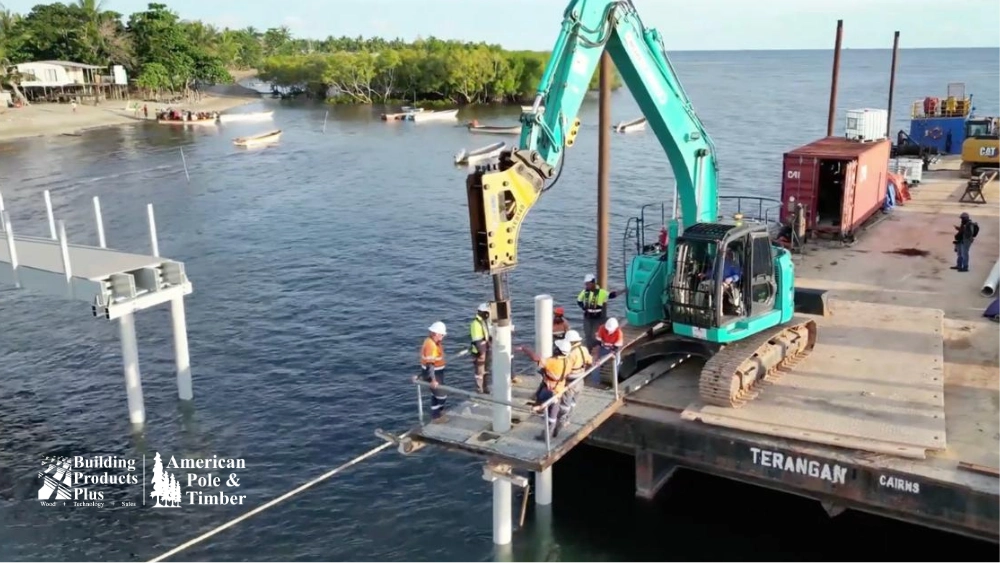
From our home in Houston, Texas, we have supported builders and property owners through more storm seasons than we can count across Texas, Louisiana, and the Gulf Coast. When it comes to helping clients before and after hurricanes, our way of working is the same in calm weather and rough: consult, inform, and supply. We ask what a project truly needs, share what we know, and provide the right materials.
If you are a contractor helping clients before and after hurricanes, or a homeowner facing repairs, our project consultants in Houston, TX are here to help you think it through.
It is about more than the storm
You do not have to be the lowest bidder or the slickest marketer to grow. Sometimes it just takes showing up before and after a storm, with no agenda other than helping people stay safe. Those people have families, pets, goals, and dreams, and they remember who was there.
The goodwill you build in those moments becomes the foundation of a loyal client base, more referrals, and a reputation that sets you apart. So this hurricane season, think about your customers first. Helping clients before and after hurricanes is not a storm-season tactic, it is how you build a reputation. When the wind dies down and the real rebuilding begins, they will remember who helped.
Helping clients before and after hurricanes: common questions
How can contractors help clients before and after a hurricane without being pushy?
Lead with care, not a pitch. A simple check-in message asking whether the family is safe, followed by an offer to do a quick walkthrough, is helpful rather than salesy. The goodwill earns referrals naturally over time.
What should a post-storm walkthrough check for?
Look for fastener failure or shifting in decks, docks, and fences, settling or movement in pier and piling foundations, water leaks or structural stress, and hardware or joint damage in wood structures. Even with no visible damage, the walkthrough gives clients peace of mind.
How can homeowners reduce damage from the next storm?
Build back with durable materials. Treated wood outlasts untreated lumber, and for structures in or near water, vinyl and composite options resist rot, marine borers, and corrosion, which helps prevent a repeat loss in a future storm.
Are vinyl or composite materials worth it for coastal rebuilding?
They can be, depending on the project. Vinyl pilings and FRP composite piles resist the conditions that wear down wood and steel and often carry long warranties or design lives. The right choice depends on the structure, the site, and the budget, which is worth discussing with a supplier.
Where can families find trusted hurricane preparation resources?
Government and nonprofit sources are reliable starting points, including Ready.gov for preparation checklists and the American Red Cross for safety guidance before and after a storm.
We are here when you need us
Helping clients before and after hurricanes comes down to showing up, and we are glad to help you do it. Whether you are a contractor caring for your clients or a family beginning to rebuild, you do not have to figure out the materials alone. Call us at (800) 716-0636 or reach out to our team whenever you are ready. There is no rush and no pressure, just help when you want it.
Sources and references
- Ready.gov, Hurricanes: federal hurricane preparation guidance
- American Red Cross, Hurricane Safety: before and after storm safety
- NOAA National Hurricane Center: official forecasts and storm tracking
Author: American Pole & Timber team, serving the Gulf Coast since 1993. Last updated: August 2026.